

A Little Commotion: Clara Ramona Brings Flamenco to Bunker Hill
Tuesday, November 24, 2026
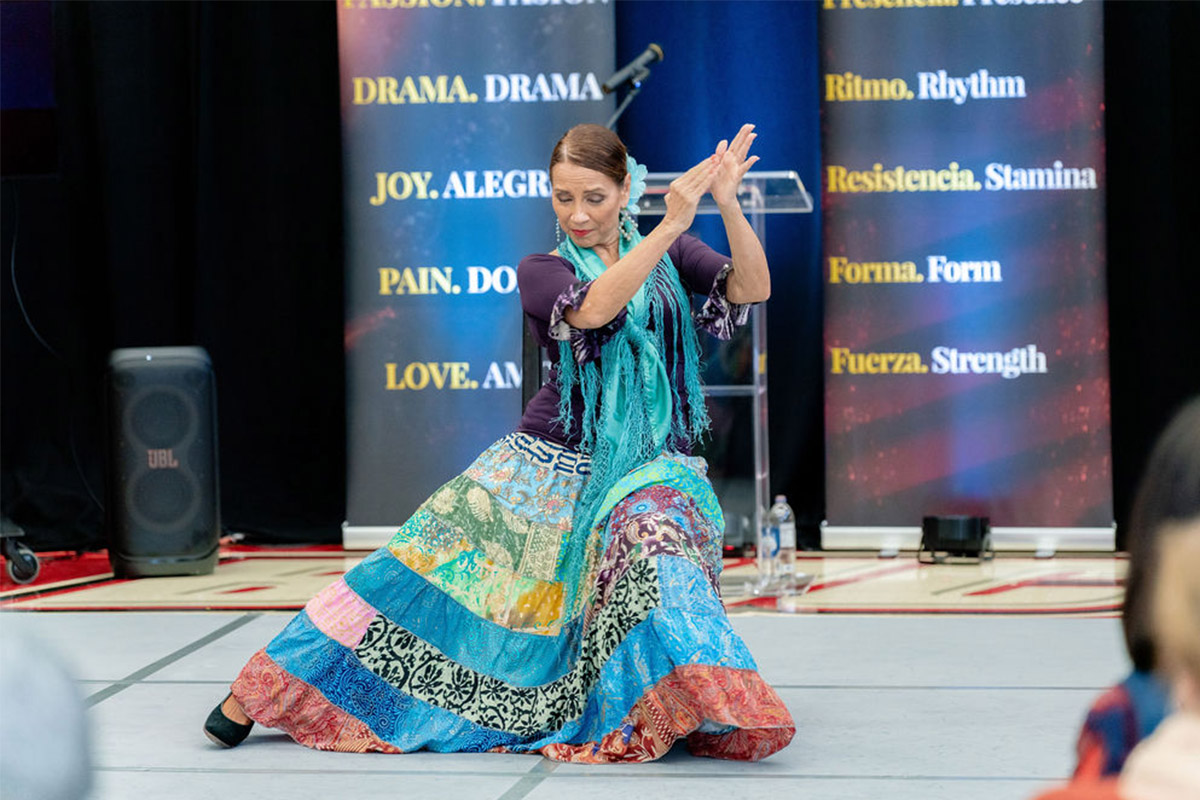
Bunker Hill welcomed internationally acclaimed flamenco artist and performer Clara Ramona to campus on November 12 for a special presentation and workshop with the College community.
“The question we will all be asked before we cross over to the next world is, I believe, how did you contribute to or serve humanity?” said Dr. Robin Chandler, BHCC’s inaugural artist-scholar-in-residence, who introduced Ramona and affectionately called her hermana, or sister.
Chandler went on to speak about the importance of artists as storytellers who pass on and teach traditions.
“It is said that flamenco is a different way of seeing the world,” she continued, describing the importance of master craftspeople who “preserve traditional performing arts and cultural knowledge systems that connect people with our collective pasts as human beings and prepare humanity for the future.”
A graduate of the Boston Conservatory, Ramona began her professional career as a principal dancer and choreographer with the Ramón de los Reyes Spanish Dance Theatre before establishing her own dance company, Ballet Español de Clara Ramona, in Madrid. Over her 50-year career, she has traveled the world, bringing Spanish dance to audiences across the Americas, Europe and Asia. Among her most celebrated choreographic works is Carmina Burana, which enjoyed a yearlong run at Madrid’s Teatro Calderón before touring Spain and the Americas.
Now based in Hong Kong, Ramona has spent more than three decades expanding the reach of flamenco throughout Asia, introducing generations of dancers to the Spanish art form through performances, workshops and educational initiatives. Both of her sons have followed in her footsteps, with her youngest, Nino de los Reyes, becoming the first flamenco dancer to receive a Grammy Award in 2020.
Before Ramona took the stage, Chandler referenced John Singer Sargent’s 1882 masterpiece El Jaleo, housed at Boston’s Isabella Stewart Gardner Museum, its title roughly translating to “the commotion.”
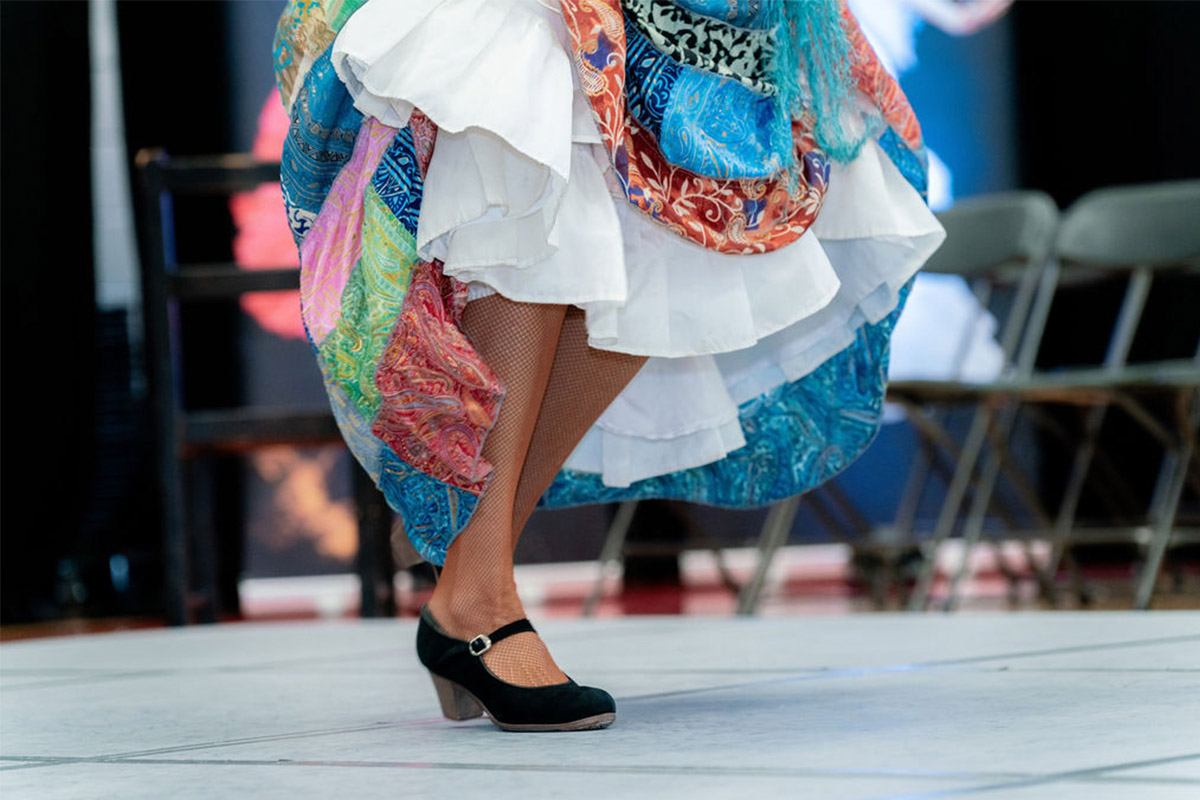
And a commotion it was. Swirling skirts of vibrant colors, clicking castanets, sweeping arm movements and rhythmic stomping feet captivated the audience.
“You know, sometimes they say dancers should be seen, not heard,” a winded Ramona remarked after wrapping up her first number, a solo performance set to music from Spanish composer Manuel de Falla’s opera La vida breve (The Short Life).
She shared a brief history of Spanish dance and the many schools and regions that inform it, explaining that flamenco, which originated in the southern region of Andalusia, is just one of several schools of Spanish dance.
Demonstrating the artistry of castanets, or castañuelas, Ramona showed how her fingers move to create different rhythms, inviting audience members to mimic the movements from their seats. It’s a technique dancers spend years mastering alongside their footwork and choreography.
“Unfortunately, we have to dance and look good while we do it. That’s the real challenge right there,” Ramona joked.
Ramona explained that while castanets are often associated with flamenco, they are more commonly used in other schools of Spanish dance, including escuela bolera and classical Spanish dance.
“Flamenco is more about the rhythm and the footwork,” she added.
She went on to describe what she calls the “flamenco tree,” which consists of two major branches: cante jondo, or deep song, characterized by more serious flamenco rhythms, and cante chico, or light song. From these stem numerous rhythms and styles, reflecting the emotional range of the art form.
Ramona also spoke about a branch known as ida y vuelta, or “round trip,” which reflects the cultural exchange between Spain and the Caribbean. Her final performance, a Cuban-inspired guajira, showcased this influence.
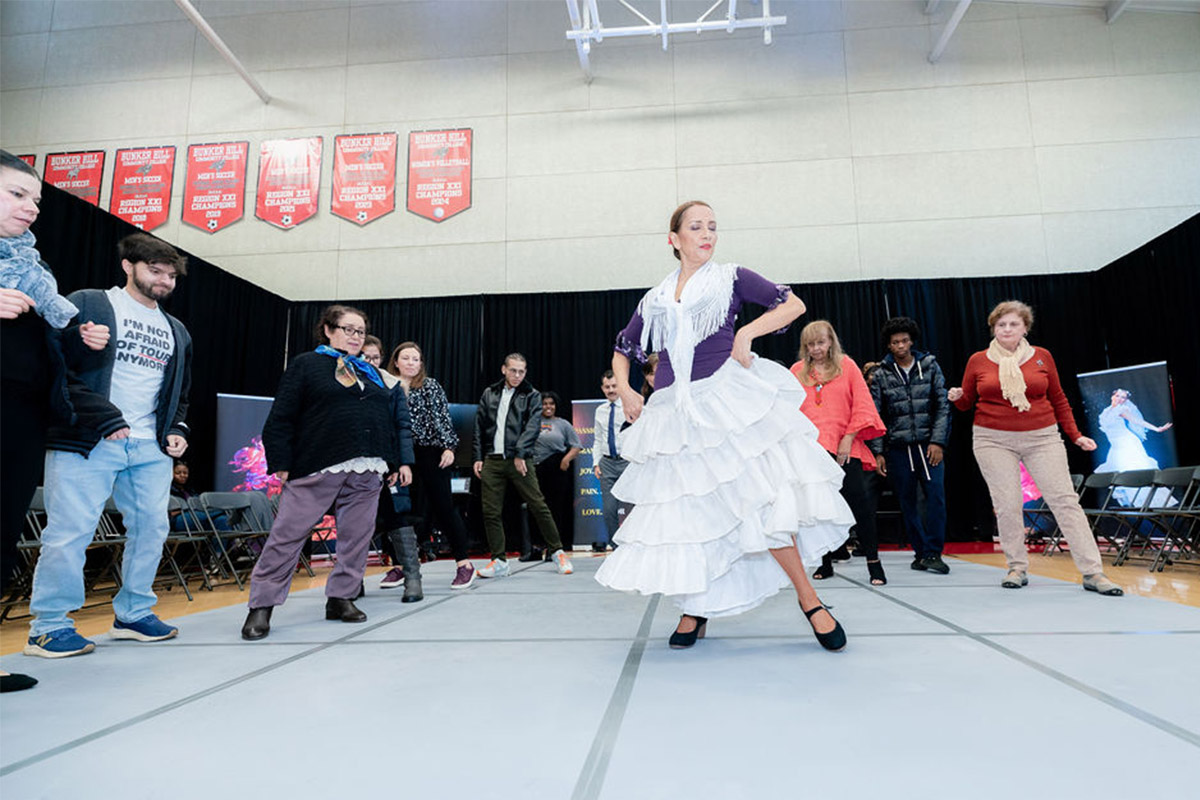
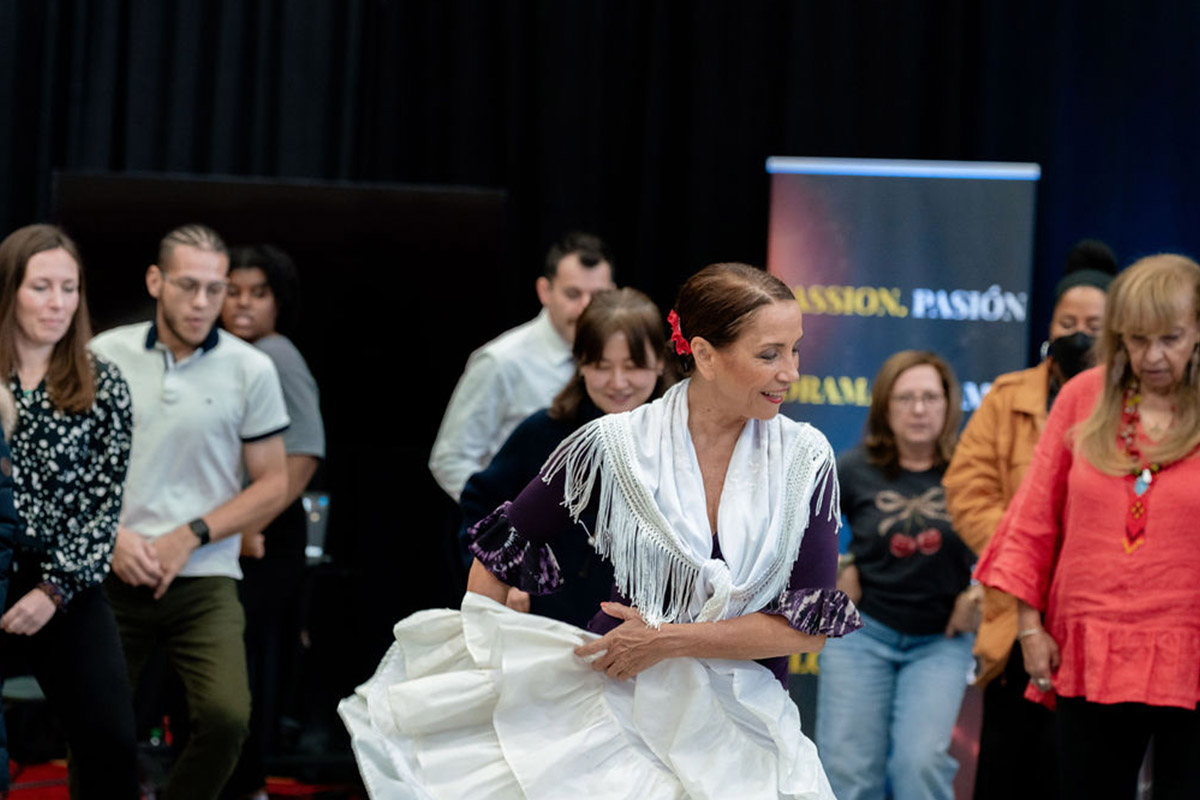
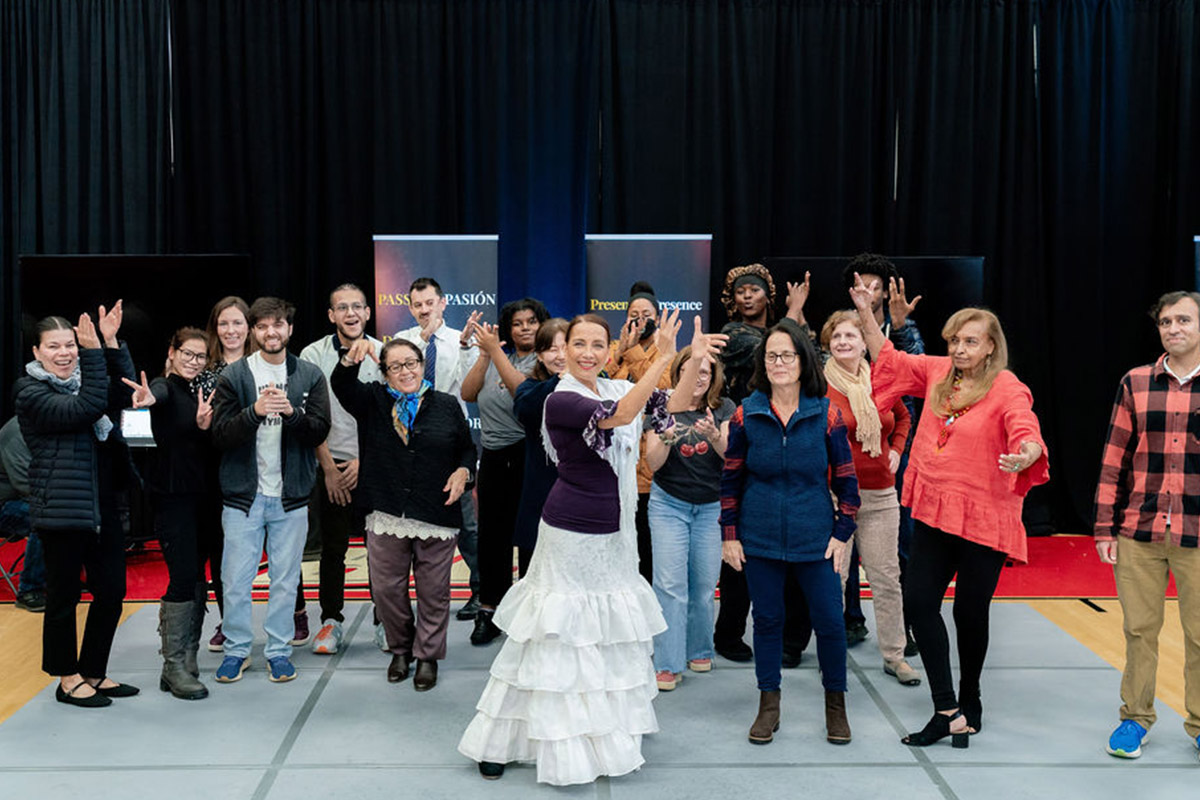
Then it was the audience’s turn. Ramona invited members of the College community onto the dance floor for a short lesson in flamenco rumba. Participants gathered in a circle around the artist, clapping along to the rhythm and trying their hand at the choreography.
“I’ve taught thousands and thousands of students all around the world, and language has never been a barrier,” Ramona said. “On the contrary, the less we speak, the more we understand each other.”
Ramona’s Boston visit also included a scheduled performance at Pao Arts Center, a BHCC instructional site in Chinatown, pairing her choreography with poetry from Chandler’s collection, The Ways of Grace: Poems of Truth and Joy, and live accompaniment by flamenco guitarist Juanito Pascual.
She’ll be back in spring 2027 for a series of four dance and flamenco workshops at the College, exploring movement, passion, health and wellness, with dates to be announced.
The Clara Ramona presentation was offered as part of the College’s Compelling Conversations series, which for more than 20 years has brought diverse voices and perspectives from around the world to the campus community.